
A Visit to Germany Helped Me Deconstruct How We Should View Incarceration
A reflection from Aisha Elliott, Chief Program Officer of the Women’s Prison Association
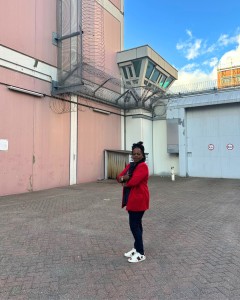
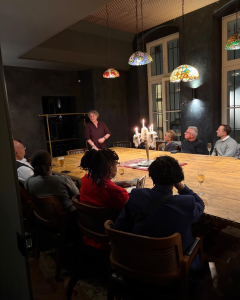
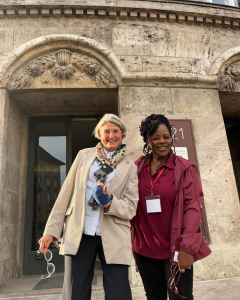
After my recent trip to Germany with the Vera Institute of Justice, alongside leaders in criminal legal system reform, I returned more convinced than ever that we must deconstruct how we view incarceration.
Pictured below is a cell used during the Holocaust, its appearance disturbingly similar to cells that still exist in many U.S. prisons today.

While the historical circumstances are different, the visual similarities force us to confront difficult questions about how far we have come in our treatment of incarcerated people.
My trip to Germany was a reminder that the way we treat people who are incarcerated reflects our values as a society.
One of my greatest takeaways was the importance of centering humanity, dignity, rehabilitation, and restoration rather than punishment.

I returned from Germany more convinced than ever that we must reimagine our response to incarceration, not simply to improve the conditions of confinement, but to fundamentally transform how we care for people and prepare them to return to our communities.


Recent Posts
Each year in New York City, thousands of women—many of them mothers, survivors of trauma, and members of underserved communities—are…
Aisha Elliott has joined the Women’s Prison Association (WPA) as the Chief Program Officer, bringing over two decades of experience…
Women impacted by the criminal legal system face layered expectations: secure stable housing, meet supervision requirements, reunify with children, and…
Culturally-inclusive. Trauma-informed. These aren’t just buzzwords—they’re principles built into our history and mission. Since 1845, the Women’s Prison Association (WPA)…